

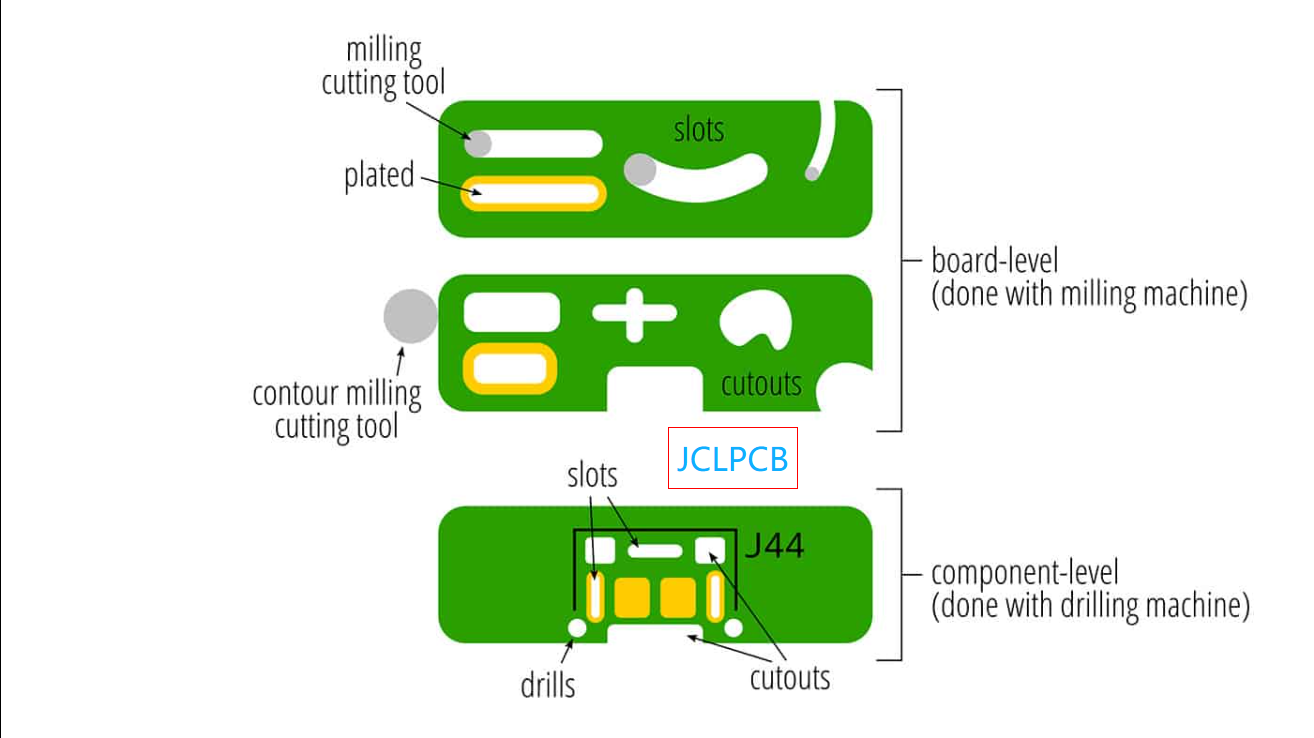
You think vias are the most overlooked detail on a PCB? Think again—**rout slots** are far trickier.
Many hardware designers draw slots casually, only to run into major issues in production. Letâs break down critical DFM tips for drilling and routing to help you avoid costly mistakes. ### ð³ï¸ PCB Drilling Guidelines - **0.3mm** is the safe, standard via size for most projects. - The smallest drill bit widely available in production is **0.15mm**. - Smaller sizes are technically possible but extremely expensive and high-risk. ### ðª PCB Rout Slots (Key DFM Rule) Slots are milled with router bits. - The smallest standard router bit is **0.6mm**, but itâs fragile, slow, and prone to breaking. - Factories often reject or heavily surcharge jobs using 0.6mm router bits. ### â Recommended Design for Manufacturability - **Slot width: ⥠0.8mm** (strongly recommended) - If you need a minimum slot: **0.6mm** with **±0.1mm tolerance** clearly noted - Avoid designing 0.5mm slots with tight tolerancesâthis will almost always lead to delays, extra cost, or order rejection. ### ð§ Final Takeaway - Vias: 0.3mm + annular ring 0.6mm - Rout slots: ⥠0.8mm - Always leave tolerance for production. Good DFM = lower cost, faster lead times, higher yield. Have you ever had a PCB order delayed or rejected due to undersized slots? Share your experience below. è¯é¢æ ç¾#PCBDesign è¯é¢æ ç¾#HardwareEngineering è¯é¢æ ç¾#DFM è¯é¢æ ç¾#PCBFabrication è¯é¢æ ç¾#ElectronicsManufacturing è¯é¢æ ç¾#EngineeringTips è¯é¢æ ç¾#JCLPCB


Post a Comment